Drew E. Winters, PhD.
Drew E. Winters, PhD.
Home
Projects
Publications
Software
Talks
Contact
CV
Light
Dark
Automatic
2
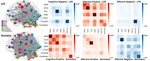
The dark sides of the brain: A systematic review and meta-analysis of functional neuroimaging studies on trait aggression
This project examined functional brain features of aggression across the literature
Jules Dugre
,
Christian Hopfer
,
Drew E. Winters
PDF
Project
DOI
Affective theory of mind impairments linked with callous-unemotional traits implicate cognitive control: A pre-registered double-blind randomized controlled trial with a dual-task paradigm
Introduction- Youth antisocial behavior strongly associates with conduct problems (CP) and callous-unemotional (CU) traits. While CP …
Drew E. Winters
,
Juliet Spitz
,
Kristen Raymond
,
Crystal Natvig
,
Rebecca Waller
,
Susan K. Mikulich-Gilbertson
,
Joseph T. Sakai
Preprint
PDF
Code
Project
DOI
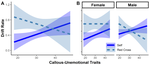
Callous-Unemotional Trait Prosocial Limitations Are Moderated by Cognitive Control Impacting Theory of Mind in Adolescents
Although callous-unemotional (CU) traits are linked with antisocial behavior, affected youth still engage in some prosocial behaviors. …
Drew E. Winters
,
Joseph T. Sakai
PDF
Project
DOI
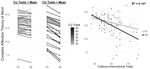
Cognitive Control Difficulties Differentiate Callous-Unemotional Traits from Conduct Problems: A Pre-Registered Double-Blind Randomized Controlled Trial Analysis
Introduction- Youth antisocial behavior strongly associates with conduct problems (CP) and callous-unemotional (CU) traits. While CP …
Drew E. Winters
,
Juliet Spitz
,
Kristen Raymond
,
Crystal Natvig
,
Rebecca Waller
,
Susan K. Mikulich-Gilbertson
,
Joseph P. Schacht
,
Joseph T. Sakai
PDF
Code
Project
DOI
Effects of COMT Suppression in a Randomized Trial on the Neural Correlates of Inhibitory Processing Among People With Alcohol Use Disorder
Introduction- Youth antisocial behavior strongly associates with conduct problems (CP) and callous-unemotional (CU) traits. While CP …
Drew E. Winters
,
Joseph P. Schacht
PDF
Project
DOI
Associations between forms of aggression and peer victimization: Does prosocial behavior matter?
Relatively little is known regarding factors that may mitigate the strength of the associations between forms of aggressive behavior …
C R Sanchez
,
J L Cooley
,
Drew E. Winters
,
B T Ricker
,
& P. J. Fite
PDF
DOI
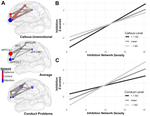
Executive function and underlying brain network distinctions for callous-unemotional traits and conduct problems in adolescents
This project employed advanced statistical approaches to redress issues in the field examining antisocial phenotypes in relation to executive functions. We found some support for existing literature while extending it to demonstrate distinct brain and executive function associations in the presence of Callout-Unemotional traits and Conduct Problems.
Drew E. Winters
,
Jules Dugre
,
R. Mckell Carter
,
Joseph T. Sakai
Preprint
PDF
Code
Project
DOI
Connectome-based predictive modeling of empathy in adolescents with and without the low-prosocial emotion specifier
Drew E. Winters
,
Anika Guha
,
Joseph T. Sakai
Preprint
PDF
Code
Project
DOI
Affective theory of mind impairments underlying callous-unemotional traits and the role of cognitive control
This original data collection (PI Winters) tests the impact of cognitive control on affective theory of mind in a sample of early adolescents that vary on callous-unemotional traits.
Drew E. Winters
,
Joseph T. Sakai
Preprint
PDF
Code
Project
Poster
DOI
Cognitive Mechanisms Underlying Prosocial Decision Making in Callous-Unemotional Traits
This project examined the extend to which perspective-taking accounted for the relatoinship between cognitive control and perspective taking as well as the underlying functional brain properties of these assocaitions.
Drew E. Winters
,
Warren W. Pettine
,
Joseph T. Sakai
Preprint
PDF
Project
DOI
»
Cite
×